Key takeaways
AR game development = building games that anchor digital content to the real world through a camera.
Most beginners start with Unity, C# and AR Foundation (ARCore on Android, ARKit on iOS).
A first prototype is one object placed on a detected surface that reacts to a tap.
India’s AR gaming market was estimated at USD 1.6 billion in 2025, with strong forecast growth.
EXR Games & Academy teaches AR/VR/MR game development online, offline and hybrid, from Tirur, Calicut and Kochi.
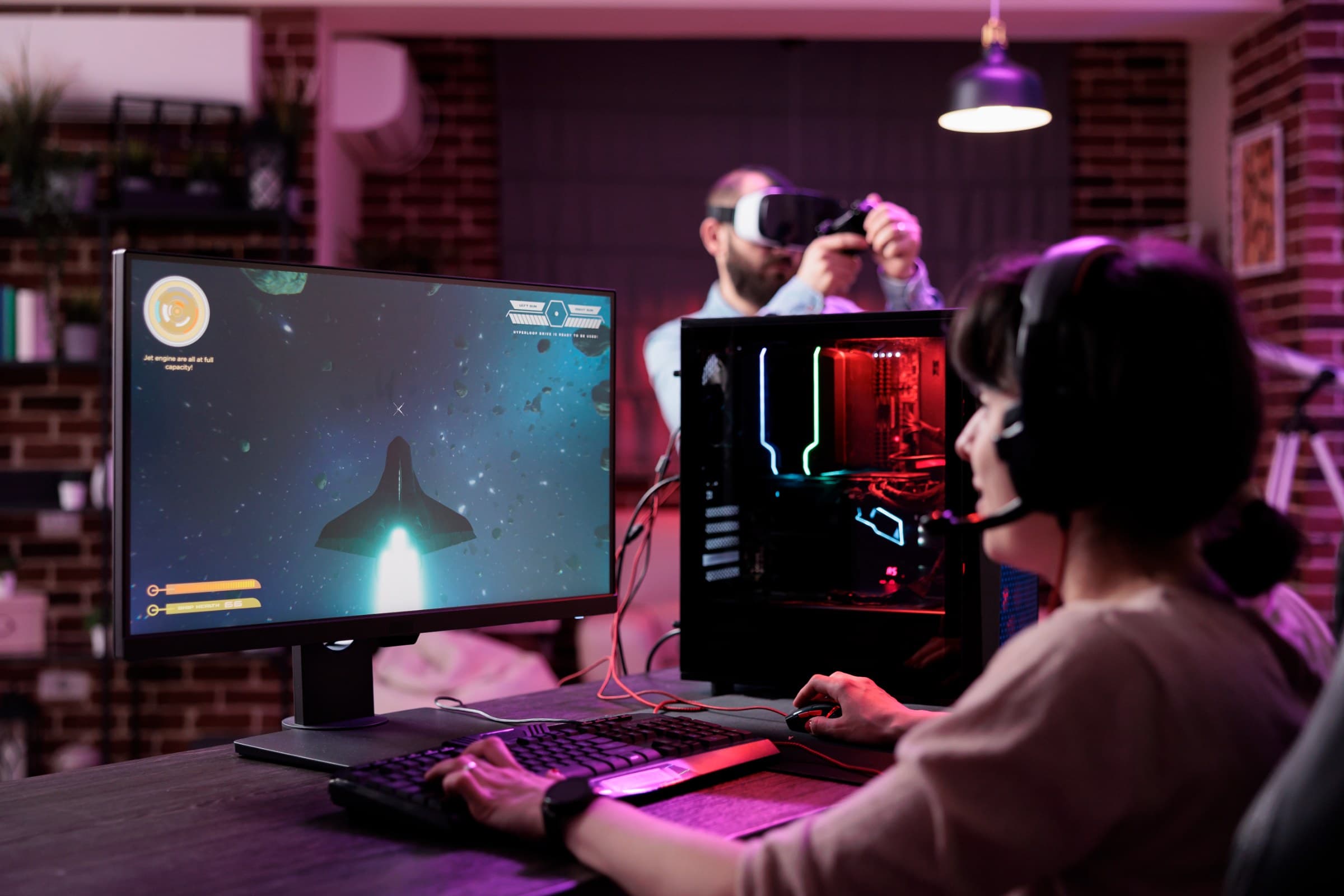
If you have ever caught a creature in your living room through your phone, you have played an AR game. Behind it sit 3D art, programming, sensors and design. This guide covers how AR game development works, which tools matter, how the market looks in India, and where to start in Kerala.
What Is AR Game Development?
AR game development builds interactive games where virtual content is pinned to physical space. The game must understand the room: where the floor is, how the device moves and how bright the scene is.
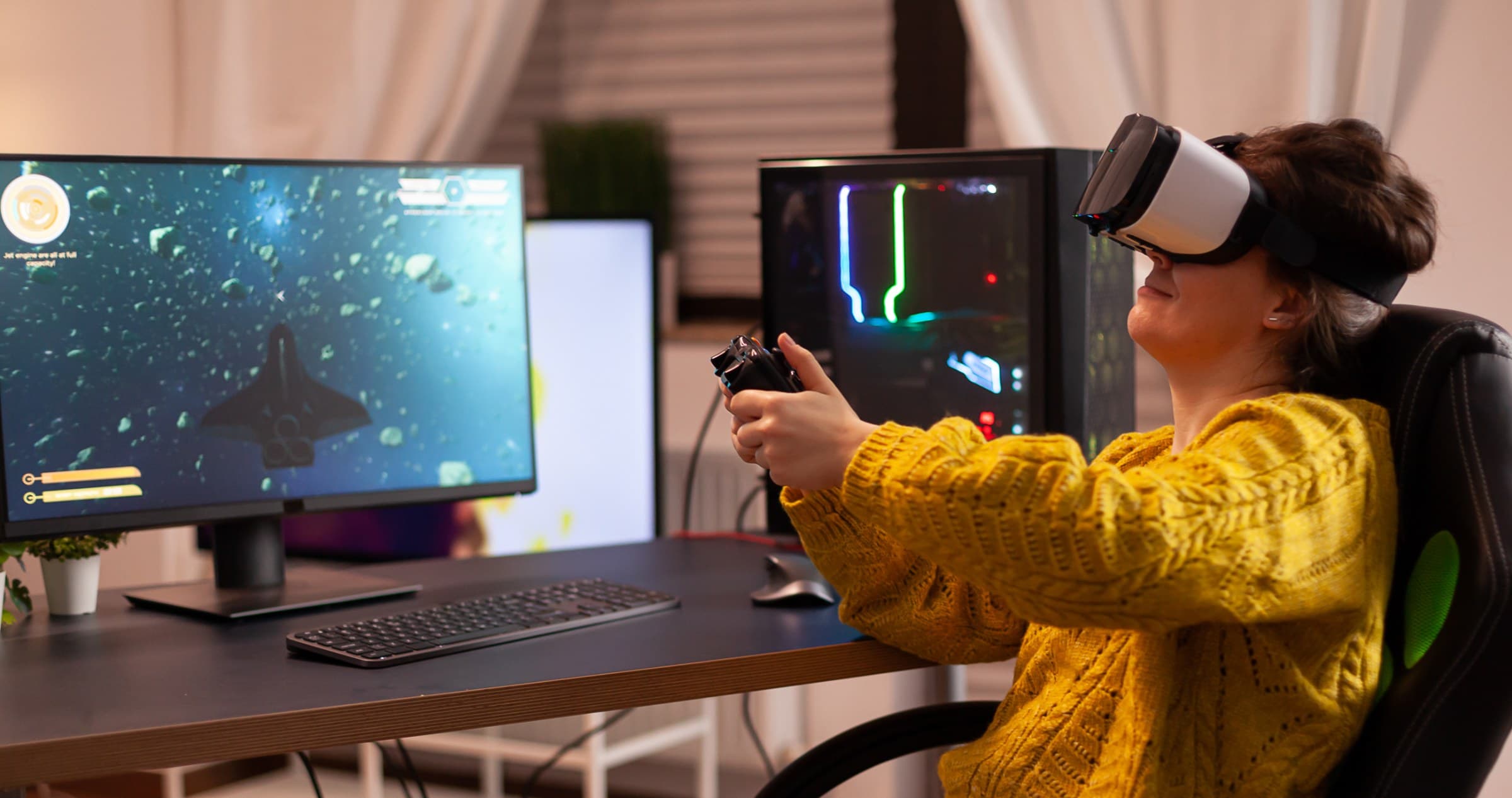
It belongs to the wider fields of augmented reality and AR development, and it overlaps with AR/VR game development because both use real-time 3D engines and spatial interaction.
AR | VR | MR | |
Real world visible? | Yes | No | Yes, with deeper blending |
Typical device | Phone, tablet, glasses | Headset | Headset with passthrough |
Cost to start learning | Low (your own phone) | Higher | Higher |
AR is the lowest-cost door into spatial computing, because learners can test on a phone they already own.
How Does an AR Game Work?
An AR game tracks the device’s position, detects real surfaces, anchors virtual objects to them, matches lighting, then runs game logic on top.
Google’s ARCore documentation explains that ARCore uses SLAM to track the phone’s position and orientation, detects horizontal and vertical surfaces as planes, creates depth maps, and provides lighting information so virtual objects look realistic. Apple’s ARKit offers the same family of features on iOS.
Motion tracking: camera features plus motion sensors tell the game where the device is.
Plane detection: floors, tables and walls become placement surfaces.
Anchors: objects stay fixed in the real world as the player moves.
Light estimation: shading matches the room.
Interaction: touch, gaze or movement drives scoring, spawning and physics.
What Goes Wrong in Real AR Games
Most AR bugs come from lighting, motion and unstable surface detection, not from code.
Apple’s ARKit guidance says tracking quality drops when lighting is poor or the device moves too fast, and plane detection results improve over time, so developers should give users feedback and design for predictable lighting. Practical design rules that follow:
Show a “move your phone slowly” prompt while the surface scan runs.
Delay object placement until a plane is stable.
Keep 3D models light so phones do not overheat.
Test in bright rooms, dim rooms, small rooms and on more than one phone.
When AR is the wrong choice: if your game does not gain anything from the real room, a normal 3D mobile game is cheaper and more reliable. Good AR game developers choose AR on purpose.
The Augmented Reality Game Development Process
Define the AR hook, pick the platform, prototype one mechanic, build optimised assets, add gameplay, tune performance, test in real spaces, then publish and iterate. This is also the answer to “how to make an AR game.”
Define the AR hook. Why does this game need the real world? Tabletop battles, treasure hunts and image-triggered quizzes each use it differently.
Choose platform and engine. Android (ARCore), iOS (ARKit) or both via Unity.
Prototype the core loop. Place one object on a surface and make it respond to a tap.
Build 3D assets. Model, texture and optimise low-poly assets.
Add gameplay and UI. Write C# scripts and design one-hand controls.
Tune lighting and performance. Stable frame rate, battery and heat.
Test in real places. The editor hides most AR problems.
Publish and iterate. Release, collect feedback, update.
AR Game Development Tools
Tool | Used for | Beginner-friendly? |
Unity + AR Foundation | Cross-platform AR games | Yes, the usual first choice |
Google ARCore | Android AR features | Yes, via Unity |
Apple ARKit | iOS AR features | Yes, via Unity |
Vuforia | Image and object recognition | Yes |
Unreal Engine | High-fidelity visuals, AR/MR | Intermediate |
Blender | 3D modelling, animation | Yes |
C# and Git | Scripting, version control | Essential |
AR Game Development with Unity
Unity’s AR Foundation lets you build one AR project for both Android and iOS.
Unity’s documentation states that AR Foundation enables multi-platform AR apps and uses each platform’s native AR SDK at runtime, so you build once and deploy to major AR platforms. It also requires a provider plug-in: Google ARCore XR Plug-in on Android and Apple ARKit XR Plug-in on iOS. unity3dunity3d
A first Unity AR game development project:
Install AR Foundation and the ARCore or ARKit plug-in from Package Manager.
Add an AR Session and an XR Origin to the scene.
Turn on plane detection and raycast from a screen tap.
Instantiate a 3D prefab at the hit point.
Add a score, timer or enemy to make it a game.
AR Game Development for Beginners: Roadmap
Short answer: Learn game basics, then C# in Unity, build one non-AR game, add AR Foundation, ship three small AR projects and package a portfolio.
Game basics: loops, 3D space, physics, level design.
C# in Unity: variables, classes, events, prefabs.
One small non-AR game first.
AR Foundation plane-placement demo.
Three AR mini games (tabletop shooter, image-triggered quiz, tracking toy).
Portfolio: demo videos, builds, short design breakdowns.
Adjacent skills: Unreal Engine, 3D art, sound, game testing.
AR Gaming in India and Kerala: Market and Career Signals
India’s AR gaming market is growing fast, and Kerala’s AVGC-XR policy targets 50,000 jobs by 2029.
IMARC Group estimates that India’s augmented reality gaming market reached USD 1.6 billion in 2025 and could reach USD 9.9 billion by 2034 at a CAGR of 21.87%. These are analyst forecasts, not guarantees. imarcgroup
On policy, reports say Kerala’s cabinet approved an AVGC-XR plan with goals of 250 companies, 50,000 jobs by 2029 and 10,000 qualified professionals. Coverage adds that training is planned in areas including game design, sound design, and VR and AR. itvoicekeralakaumudi
For learners, demand for a skilled AR developer and AR game developer should rise alongside this. Roles include AR gameplay programmer, XR developer, 3D technical artist, AR/VR QA tester and indie founder. Skills from augmented reality game development also transfer to training simulators, education apps and retail. Results depend on your portfolio and effort. No course can guarantee a job.
Learn AR Game Development with EXR Games & Academy
EXR Games & Academy is a game development training institute in Kerala. It offers a 4-month EXR AR/VR/MR Game Development programme in online, offline and hybrid formats, with campuses in Tirur, Calicut and Kochi.
EXR Games & Academy at a glance | |
Type | Game development training institute |
Campuses | Tirur (head office), Calicut/Kozhikode, Kochi |
Serves | Kerala and South India |
Formats | Online, offline, hybrid |
AR programme | EXR AR/VR/MR Game Development, 4 months |
Other tracks | AI Native Unity, AI Native Unreal, Unity & Unreal Integrated (8 months), Art, Animation and VFX |
Certification | KCDS course certification |
Support | Free demo class, placement assistance |
Batches | First and last week of every month |
Training is industry-focused, built on practical projects and portfolio development. EXR’s approach to augmented reality game development puts building and shipping ahead of theory.
What the programme covers
The EXR AR/VR/MR Game Development programme runs as four modules. AR is the focus of Module 3, with AR concepts introduced earlier in Module 1 and applied again in the capstone.
Module | Focus | What you build |
1. XR Foundations & Tools | AR, VR, MR and XR ecosystems; Unity and Unreal Engine for immersive tech; 3D assets, environments and optimisation; C# and C++ fundamentals | A first working XR project in Unity with basic 3D assets and environment setup |
2. Virtual Reality Development | VR setup and input (Oculus, Vive, Pico); headset integration and calibration; physics-based interactions; teleportation, locomotion and comfort design | A fully interactive VR environment with locomotion and object handling |
3. Augmented Reality Development | ARCore, ARKit and Vuforia; marker-based and markerless tracking; anchors, planes and real-world mapping; interactive AR UI and gestural input | A working mobile AR application with real-world surface tracking and gesture-based interaction |
4. Advanced Systems & Deployment | Mixed reality toolkits and spatial UX; cross-platform optimisation and profiling; building for mobile, PC and standalone headsets | A capstone AR, VR or MR project deployed to a real device, plus portfolio review |
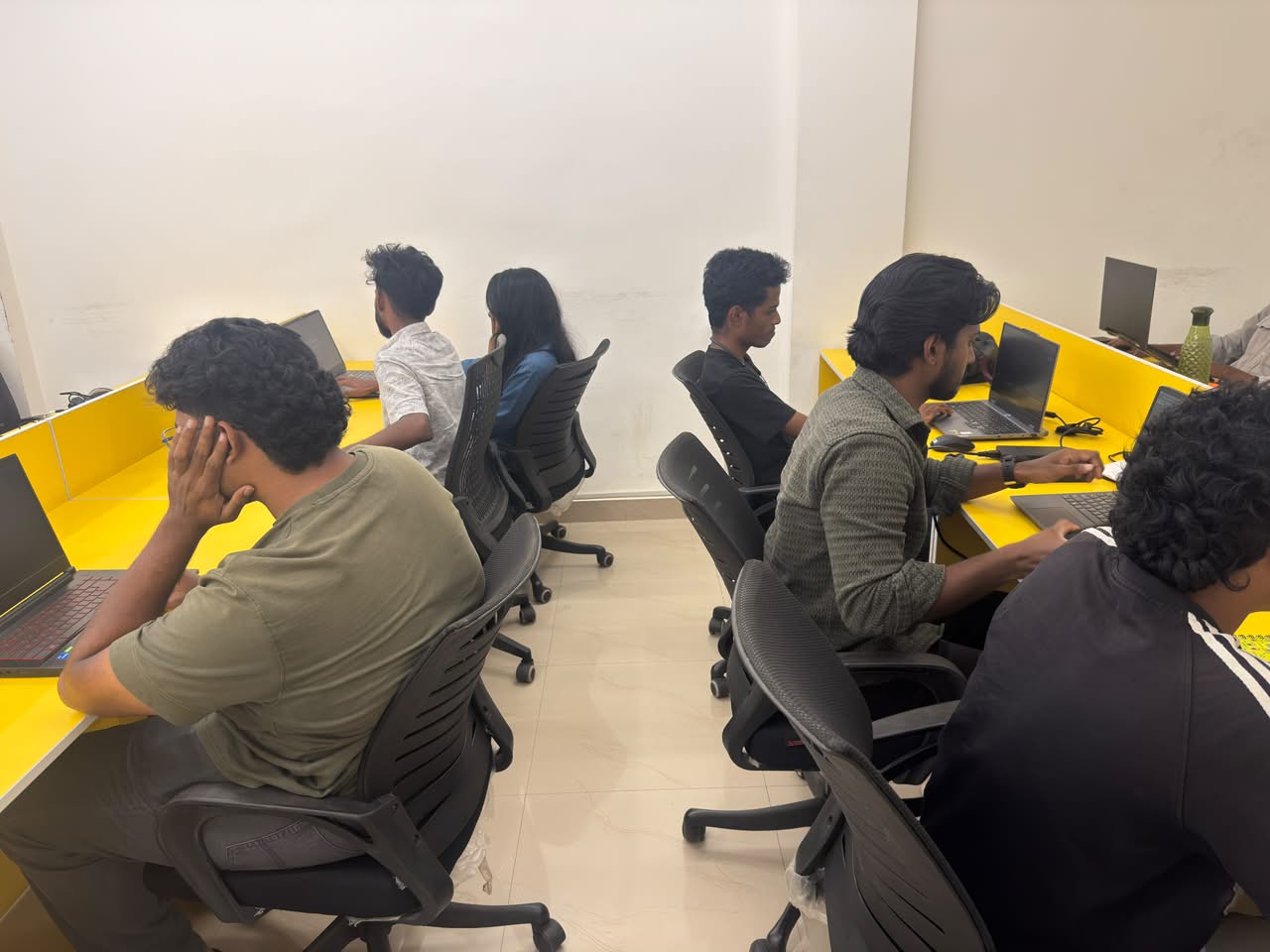
Eligibility is minimum Plus Two. The page lists the programme for ages 18 to 28, and no prior coding or game development experience is required.
Who teaches and how classes run
Instructor: Jenson, XR Technology Lead at EXR Games with 5+ years of experience. He has built AR and VR applications for education, training and entertainment.
Batch size: 10 to 20 students.
Hardware: EXR provides access to Oculus Quest, HTC Vive and mobile AR devices during the course, so students do not need to buy equipment.
Tools covered: Unity XR Toolkit, Unreal Engine VR, Oculus SDK, ARCore and ARKit, Vuforia, Mixed Reality Toolkit, Blender, Git.
Capstone: each student builds a complete AR, VR or MR project of their choice, deployed to real hardware.
Support: resume building, portfolio review, mock interviews and connections with industry partners. EMI payment options are available.
Free demo class: attend one before enrolling.
How to compare any AR development course (including ours)
Which engine and SDKs are taught, and which versions?
How many AR projects will you ship, and can you see past student work?
Who teaches, and what have they built?
Can you attend a demo class before paying?
Is there support for portfolio building and job preparation?
Fees are not listed in this article. Contact your nearest campus for current details.
Campus contacts
Tirur (Head Office): AAK Mall, Naduvilangadi, Tirur 676101, +91 99951 06688
Calicut: Wings Avenue, Panniyankara, Kozhikode 673003, +91 98470 41048
Kochi: Corrazone, University Road, Thrikkakara, Kalamassery, Ernakulam 682022, +91 95266 89506
Book a free demo class → Contact page
FAQs
What is AR game development?
AR game development is building games that blend digital objects and gameplay with the real world through a camera-enabled device. It combines a 3D engine such as Unity, AR SDKs such as ARCore and ARKit, and game design.
How do I make an AR game as a beginner?
Learn basic Unity and C#, install AR Foundation, detect a flat surface, place a 3D object on it, then add tap interaction, scoring and timers. Start with one mechanic and expand after it works.
Which tool is best for AR game development?
Unity with AR Foundation is the most common beginner choice, because one project can target Android and iOS. Unreal Engine suits higher-fidelity projects and is a good second step.
Is AR game development hard to learn?
It is moderate. With basic programming knowledge, a first prototype can take weeks. Reliable tracking, optimisation and good design take months of practice.
What is the difference between AR and VR game development?
AR adds digital content to the real world, usually on a phone. VR replaces the world with a virtual one in a headset. Skills like 3D, scripting and optimisation are shared.
Do I need an AR game development course?
No, but structured training with mentoring, project work and portfolio review shortens the learning curve and helps avoid common mistakes.
Is AR game development a good career in Kerala?
Demand signals are positive: Kerala’s AVGC-XR policy targets 50,000 jobs by 2029, and India’s AR gaming market is forecast to grow. Outcomes still depend on your portfolio, skills and effort.
Can I learn AR game development online?
Yes. EXR Games & Academy offers online, offline and hybrid formats, so students across Kerala and South India can join from home or attend a campus.
Where can I learn AR game development in Kerala?
EXR Games & Academy trains students at its Tirur, Calicut and Kochi campuses and online. It runs a 4-month AR/VR/MR Game Development programme with a free demo class.
Final Thoughts
AR rewards small, finished projects. Pick Unity, build a plane-placement demo this week and keep shipping. If you want mentors, a portfolio and local batches, a focused programme in augmented reality game development can shorten the road from first prototype to job-ready skills.
More guides: EXR blog.
Sources
Unity, AR Foundation manual: https://docs.unity3d.com/Packages/com.unity.xr.arfoundation@6.0/manual
Google for Developers, ARCore fundamental concepts: https://developers.google.com/ar/develop/fundamentals
Apple Developer, Understanding World Tracking: https://developer.apple.com/documentation/arkit/understanding-world-tracking
IMARC Group, India Augmented Reality Gaming Market: https://www.imarcgroup.com/report/en/india-augmented-reality-gaming-market
IT Voice, Kerala Cabinet approves AVGC-XR policy: https://www.itvoice.in/kerala-cabinet-approves-policy-for-animation-visual-effects-gaming-comics-and-extended-reality